
Chiselled.Chalky.Stylish
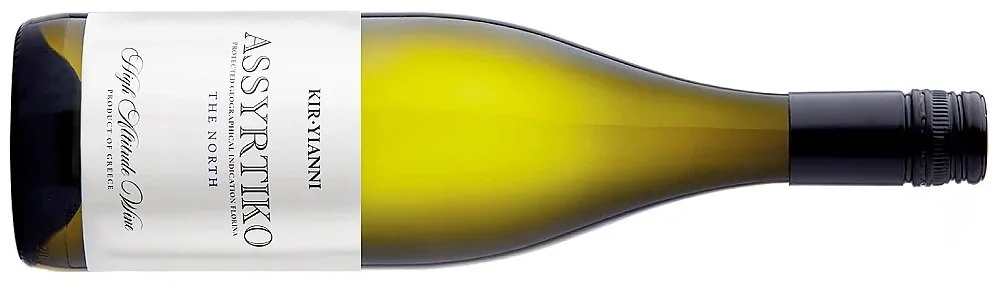
This is nice. White flowers, sliced, white-fleshed fruits, grapefruit pith, lemon pith and lime pith. No need to elaborate. Not every wine needs an essay when a pithy sentence will do. 13.5% alc. Drink now-2029.
Press review:
The Wine Advocate: “The Kir-Yianni 2025 Assyrtiko ‘The North’ is a playful interpretation of a grape more commonly associated with the southern Greek islands. Grown in the high-altitude vineyards of Macedonia, it shows impressive linearity and precision with delicate aromas of citrus, tropical fruit and summer flowers. The wine is taut and clean on the palate, driven by vibrant acidity and a strong sense of inner tension. By cultivating Assyrtiko in northern Greece, Kir-Yianni captures a cooler, more restrained expression of the variety, emphasizing freshness, aromatic finesse and mineral structure. Drink now-2029.” 92 points

“You find the landscape in this wine.” - Luc Bettoni, winemaker at Les Eminades
“Most wine I taste gets given away. Not this bottle.” - Tamlyn Currin for JancisRobinson.com
The Montmajou is packed with minerally chic, but it’s not all sharp edges and paper-cuts, as can be the case with early-picked impersonators, there’s a toothsome succulence at its core too. It’s a blend of Grenache Blanc (80%), which, when grown on chalky soil, gives the flinty, limestone bite that we love, and Marsanne (20%) which brings a hint of honeysuckle nectar that tempers the wine’s elemental side. Drink it from a large glass, because the aromas will fill the void with citrus peel and quarry dust and jasmine. A beautiful, understated wine for fine-dining and an imaginative departure from the usual suspects. 13% alc. Organic & biodynamic. Drink now-2027.
Press review:
JancisRobinson.com (Tamlyn Currin): “Hold the glass to your nose. And hold … hold … hold. You won't want to put the glass down. It’s the scent of daffodils, sage flowers, cold honey butter. It’s like stepping out the door of an old stone cottage on a remote coast where you can taste the dunes and the sea salt and the tiny wind-swept flowers on the whip of a wild, cold wind. It's sitting on those stone steps with a slice of buttered toast and lemon curd, sucking up the brusque morning with your slow, warm tea. It’s a rugged beauty that feels like silk tatters on salt-etched stones. Most wine I taste gets given away. Not this bottle. Very Good Value. Drink now-2032.” 17.5 points
Customer Comments:
“We absolutely loved the Montmajou, but I'd rather keep to myself than share!” - Mr T.F.
“It's a wonderful wine. I only had two sips before I ordered the other 6!” - Mr. N.R.
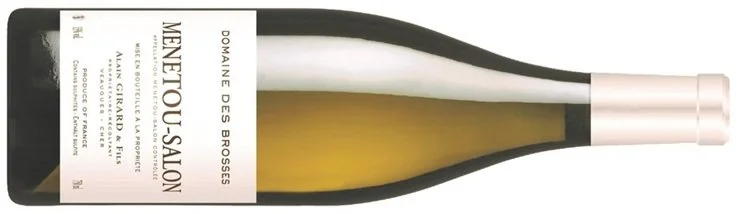
Menetou-Salon, for those who don’t know, is an appellation just down the road from Sancerre, where the same grape variety (Sauvignon Blanc) grows on the same soil (limestone) under the same sun. I have very fond memories of driving through France with my parents, and my dad would always stop at his favourite caviste and buy a couple of cases of Menetou-Salon, eschewing all the Sancerres on offer, in the hope that the shopkeeper would hold him in higher esteem than he did all the other Brits who would stock up on “good ordinary claret”, “a jolly reliable Macon” and “a flinty Sancerre”.
Domaines des Brosses do make a Sancerre, which goes for about £30.00 a bottle, but we much preferred this, their less expensive Menetou-Salon, which is crystal clear, zippy and mineral, fleshed out by greengage, lime and white melon and that signature nettle note that we always hope to find in a good Sancerre. I think my dad would approve. 12.5% alc. Drink now-2029.
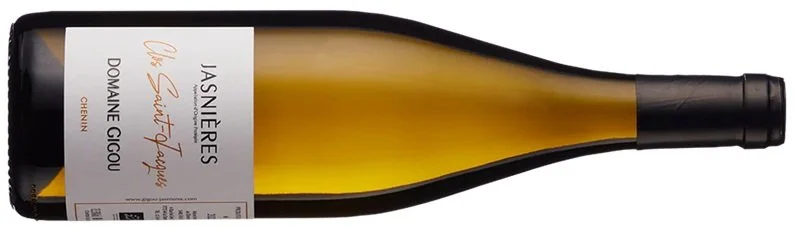
“Gigou’s Jasnieres ‘Clos St-Jacques’ – from very old vines – transports you to a world of considerable mystery and offers insights into why Jasnières was historically viewed as one of France’s grands crus.” – The Wine Advocate
One of the great perks of our job is to visit a winemaker, wander through the vineyards, learn about their philosophy, enjoy a spot of home-cooked lunch and conclude with a tasting of their wines. A wonderful perk, I’m sure you’d agree, but some bias must surely creep into one’s assessment of the wines. The less romantic, but arguably more clinical method, is to do it horizontally. No, madam, that is not what I mean! A horizontal tasting involves the side-by-side comparison of different wines from a particular vintage and that is how we discovered this absolute stunner.
We tasted around 150 Loire Chenin Blancs from the 2024 vintage, which included examples from Savennières, Saumur, Anjou, Montlouis and Jasnières, and the quality level was generally very high (e.g. Domaine des Baumard, Domaine FL, Chateau Plaisance, Domaine du Closel and Domaine des Sables Verts), yet this tall poppy was truly on another level and, as soon as we tried it, our pulse started racing, our pupils dilated and we recognised that old familiar feeling. Yes, folks, we were about to raise a purchase order.
Jasnières is a tiny appellation on the Loir, not the Loire, a small tributary about an hour south of the racing town of Le Mans. Very few people are familiar with it today, but it was the favourite wine of King Henry IV of France in the 16th century, so it has 500 years of history under its belt and the walled vineyard, ‘Clos St Jacques’, is the jewel in its crown. The vines are very old (averaging 70 years) and sit on a topsoil that is rich in silex (as you would more commonly find further east in Sancerre) above a tuffeau limstone bedrock, giving the wine a double-mineral turbo-charge.
If you need a reminder of what a ‘mineral’ wine tastes like, then do give it a try. It feels like the wine has found its way into the bottle via fissures in a rockface, over crumbled stone and tectonic ruptures, through flint split open with a pickaxe. That would make for a very austere experience if it didn’t have the balancing succulence of sweet fruit and, in-between the cracks, you may find yuzu, apricot, lime and greengage weaving their way through.
It was barrel-fermented (a costly exercise, but one that dramatically improves the way that the oak is integrated) then aged 50% in foudre and 50% in smaller format oak, with the barrels varying in age from 2 to 6 years. All of these little details add layers of flavour complexity that are seldom found in a wine priced at £23.95 per bottle, so we think it’s an absolute steal! You can drink it now, but like all great Chenin Blancs, it has the capacity to age at least 10 years from vintage. There are more fashionable Chenin producers from the Loire than Gigou, and maybe the likes of Thibaud Boudignon and Richard Leroy make arguably finer examples, but for sheer exuberance and flinty excess, we wouldn’t swap this one. 12.5% alc. Drink now-2034. Organic.
Press review:
Tamlyn Currin for JancisRobinson.com: “Sweet woodruff, honey, lanolin and pears. While Mabileau’s Chenin tasted like the gods were at war over the firmament, Gigou’s Chenin tastes like the dryads are holding a Spring flower festival in a wild meadow around a stone circle. It’s so damn pretty but also, beware, bewitching. The honey (light, redolent with acacia blossom) and pears (golden skins, dripping, a little raspy) are framed in herbs so perfumed and intoxicatingly pungent that I am sure they’re used for spells. The energy at the heart of the wine is tiny but fierce, as if the dryads harnessed a bee to power the light that fills every liquid-sunlight molecule of this wine. Wild orange on the finish. And then the stones. Stones on the finish. Flowers growing out of the stones. Good Value. Drink now-2034.” 17.5 points

“Luis Seabra’s style is clean, precise and elegant - wines that reflect their birthplace, the soils and varieties and the year when the grapes grew. Superb wines.” - The Wine Advocate
When taking a bottle of wine to a dinner party, there’s a certain amount of pressure when you are a wine merchant (as we occasionally pretend to be) to choose something that’s both delicious and original. We might feel like a flinty Chablis, but that would display a woeful lack of imagination, so we flick through our mental Rolodex of groovy alternatives and this Portuguese white often springs to mind first.
It’s very much a ‘mineral-driven’ white, informed by the schist (xisto) soil on which the vines grow, with a rocky undertow to the notes of lime cream, oyster shell and white flowers. It’s a blend of mostly Rabigato with 20% Arinto and 5% each Gouveio and Codega from 35- to 60-year-old vines, fermented with indigenous yeasts and aged in used French oak barrels, with 30% of the wine fermented and aged in stainless steel to retain its edgy freshness. 12.5% alc. Drink now-2029.
Press review:
The Wine Advocate: “The white 2024 Xisto Ilimitado Branco was produced with 70% Rabigato, 20% Arinto and 5% each Gouveio and Códega from different plots in the zone of Mêda on mica and schist soils at 500 to 700 metres above sea level. The full clusters were pressed, the juice let to settle and then fermented with indigenous yeasts and without temperature control. The wine matured with full lees in 228- and 500-litre barrels and 30% in stainless steel. It didn't have any bâtonnage and went through full malolactic fermentation. It follows the path of freshness of the 2023, clean and precise, with a serious palate with a stony sensation. It has contained ripeness, 12.5% alcohol, 5.3 grams of acidity and a balanced mouthfeel with very good freshness and acidity. Drink now-2030.” 92 points

“Terre Nere’s Etna Bianco is one of the best values coming out of Sicily today.”- Eric Guido, Vinous
“Terre Nere is one of the star producers in Etna.”- Jamie Goode
This delectable white from the northern slopes of Mount Etna gently evokes its volcanic origins without taking you on the full white-knuckle ride that some of the more dramatic examples can do. It is bright and chic, with subtle, smoky, crumbled stone notes set beautifully against pithy citrus fruits, mandarin, grapefruit, wild flowers and blanched almonds. It has the cool precision of a maritime wine with its flavours coaxed along by a refreshingly tangy acidity, a chalky mineral mouthfeel and a lovely salted nuttiness on the finish. It is a blend of Carricante (70%) with the other 30% made up from indigenous Catarratto, Inzolia, Grecanico and Minnella grapes from 20-60 year old vines grown at 600-900 metres. 12.5% alc. Drink now-2030. Organic (certified)
Press review:
The Wine Advocate: “The Tenuta delle Terre Nere 2025 Etna Bianco is not 100% Carricante but a traditional blend of approximately 70% to 80% Carricante with Catarratto, Minnella, Grecanico and Inzolia. It was born almost accidentally from the white varieties historically interplanted among old red vines on Etna’s north slope. Marco de Grazia originally separated those grapes so that his Etna Rosso could be pure Nerello Mascalese, but he liked the resulting white blend and continued the tradition. The 2025 vintage is excellent for both whites and reds, offering intensity, sharpness and cleanness. Here, those qualities come together harmoniously and distinctly. The wine is perky, saline and smooth, with enough body to give it presence without getting in the way. Drink now-2030” 93 points
Vinous: “The 2025 Etna Bianco is sweetly floral with a mix of nectarines, peach sorbet, mint and lemon zest. It sweeps across the palate, lifted and juicy in style, with crisp white stone fruits and a contrasting citrus tinge. This finishes with a steely inflection and a perfumed top note. Drink now-2030“ 92 points
Customer comments:
“Just love the Etna Bianco” - Mr T.K.
“Delicious!” - Mr. J.C.
“Love the Sicilian white from Terre Nere by the way” - Mr T.B.

Our remit at Vin Cognito is not to recommend stars that have already risen, but to spot the next wave far out to sea before it swells to such a size that everyone can see it and wants to cut in and Domaine de la Monette is exactly what we have been looking for.
A little struck flint on the nose, giving it significantly more intrigue than you would normally find in a Bouzeron, while the Aligoté grape’s classic grapefruit flavour pulls through nicely on the palate, where it meets with the nutty oak, limestone minerality and wispy smokiness to give this the feel of a baby Meursault. There’s definitely a real frisson of excitement to be had here and it’s not often one hears that said that about a Bourgogne Aligoté.
In Jancis Robinson’s review below, she suggests that it’s “probably not as complex as Dom de Villaine's”, which might seem like a downgrading of this wine’s value, until you realise that she is referring to Aubert de Villaine, the owner of Domaine de la Romanée-Conti! 13% alc. Sourced from the lieu-dit, ‘Les Fias’, which is located on a very chalky, east-facing hillside. Drink now-2030.
Press review:
Jancis Robinson MW: “Quite a haunting nose. Excellent structure and acidity. Jewel-bright fruit. Probably not as complex as Dom de Villaine's but a good effort. Good Value. Drink now-2030” 16.5 points
Customer comments:
“Our love of the Bouzeron continues! If you have any more we will take it.” - Mr L.D.

The trouble with discovering a predilection for something is that you quickly become picky and that’s what has happened to us with Albariño. First there was the infatuation, when we rushed headlong towards anything that said Albariño on the label, then came the disillusionment, as we discovered that some Albariños were better than others, and finally came the nitpicking, as we refused to settle for ones that were too light or too astringent or too vegetal or too short or who still lived with their parents. It would take a real beauty to turn our heads and that’s what happened here.
The Attis ‘Lias Finas’ 2024 reminds us why we fell in love with Albariño in the first place. It pours a bright, fresh, silver-lemon colour with a hint of green at the edge , and is dry yet full of succulent, juicy fruit, glistening with grapefruit, apricot, white peach, chalk dust and salt flakes. ‘Lias Finas’ means ‘fine lees’ and indicates that the wine was aged on its lees for 6 months (25% of which was in large oak foudres), giving the wine extra body and richness. Swoon. 13% alc. Drink now-2029.
Press review:
Vinous: "The 2024 Albariño Las Finas is from Meano, Val do Salnes, Rias Baixas. This has attractive aromas of peach, lychee, jasmine, herbs and mint. It is dry, medium-bodied and slightly creamy in texture. This gains freshness on the palate, defining a complete profile. The 2024 is a well-made, nuanced Salnes Albariño. Drink 2025 - 2035.” 94 points
Tim Atkin: “Racy, crunchy expression of Val do Salnés Albariño with layers of citrus and macadamia nut and a textured mid palate. Drink now-2028.” 92 points
Jancis Robinson MW (previous vintage): “Really lifted, marine, appetising nose. Savoury, saline finish. Lots to get your teeth into. Drink now-2027.” 16.5 points
Customer Comments:
“Magnificent!” - Mr. D. T.
“I’m m in love. Please may I have a another half case?” - Mrs. V. J.
“Exciting and sculpted. Just brilliant!” – Jancis Robinson MW, 17 points
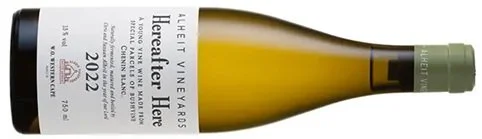
A new wine from Chris Alheit is big news in these parts, which is a reflection of Chris Alheit’s mighty reputation and not a criticism of these parts. It’s a Chenin Blanc made from young vines, planted by Chris and Suzaan with one eye on the future (young vines eventually become old vines after all) and is made in the same way as their single vineyard wines (malolactic fermentation, 18 months in barrel etc.) and is abuzz with energy and precision. It’s a fantastic example of bush-vine Chenin full of cool stone fruits and something earthy, like grist from the mill, and plenty of dry extract and tannic pinch to give it authority. A wine that bridges the gap between their (sadly discontinued) Flotsam and Jetsam white and their premium ‘single vineyard’ cuvées. 13.5% alc. Drink now-2030.
Press review:
JancisRobinson.com: “Wild honey, sour cherry, mimosa on the nose. Honeysuckle. Quince on the palate and then both taut and rich, dense and wired to cutting point; lime marmalade and gingerbread. Floral and tense and thrilling. So goddam alive! It tastes as if it wants to take off like a rocket. (TC)” 17 points
Jancis Robinson MW: “Rich and very honeyed and Chenin. Exciting and sculpted. Just brilliant!Long, throbbing fruit. (JR)” 17 points
Greg Sherwood MW: “Made from a mixture of young and older vines aged between 5 and 40 years old, after 18 months of elevage with 66% aged on its fine lees, the complex aromatics reveal a rich leesy, savoury yellow fruited nose with pithy white citrus, peach stone, bitter almonds, dried herbs, orange blossom and hints of lemon oil. Rich but not too overtly “fruity”, the palate is plush, harmonious and textural with hints of honeydew melon, lemon pastille, white peach and savoury leesy biscuit hints. Really quite serious, and seriously delicious! Drink now and over the next 8 to 10 years.” 94 points
Vinous: “The 2022 Hereafter Here is a mixture of young and old vines due to the higher yields this year, whole bunch pressed with 18 months elevage, two-thirds on the lees. The well-defined bouquet has yellow plum, orange blossom, Japanese yuzu and crushed stone aromas. The palate is very harmonious, with a crisp line of acidity. A linear, alost Zen-like razor-sharp Chenin displaying wonderful nerve on the finish. Superb.” 91 points
Tim Atkin: “Herafter Here is Chris Alheit's biggest-production Chenin Blanc, made from five different sources in Stellenbosch and the Swartland. The vines are mostly younger, producing a wine that's comparatively immediate, with a nice interplay between peach an green apple fruit and impressive brightness for a 2022 release. 2023-28.” 93 points
Customer comment:
“A very good (if pricier) replacement for the much-missed Flotsam & Jetsam!” - Mr T.P

“An exceptionally refined vintage.” – Jancis Robinson, 17.5 points
It's hard to imagine a more passionate winemaker than Rafael Palacios and that is stated in the full knowledge that passionate winemakers are aren’t exactly thin on the ground. And by passion, I don’t mean the sort of histrionic, arm-waving braggadocio of a ‘Strictly Come Dancing’ judge, I mean genuine devotion and commitment to the land they toil and the grapes they grow. When we visited he didn't just want to show us the vineyards, he didn't just want us to feel the soil in our hands, he wanted us to smell the soil. Cupping the dry earth in his hands like a religious offering, he encouraged us to inhale and “breathe in the terroir”.
He loves this precious plot in Valdeorras and you can see why, it's one of the most spectacular regions in Spain, with terraced vineyards tumbling down to the river Sil below and to enhance the experience we were treated to a glass of this delightful Godello in situ with some grilled octopus cooked on the spot by the local fisherman, Señor Pulpo (Mr Octopus).
It's hard not to be seduced by an experience like that and overrate a wine, but we try to keep our objectivity switched on at all times. In the glass, there are attractive glints of green flickering at the edge, which I always find appetising even before I’ve taken a sip, and I might be highly suggestible, but I picked up flavours of green apple, green fig and lime. It also tastes a little bit like when you scrape the flesh from a green melon and you get too close to the skin, finding that point at which sweet fruit turns to soft bitterness. It’s a real beauty, with a kind of glassy cool, a sense of fluid minerality if that doesn’t sound too pretentious (Pretentious? Moi?). Godello is a quiet grape, it whispers its flavours, with nothing much stronger in its aromatic profile than bayleaf and acacia, so you could call it Galicia’s answer to Chablis, although, in Rafa’s hands, probably a Chablis Premier Cru! It’s a great alternative to the sort of dinner party white wine you would normally place on a white linen tablecloth, and should be enjoyed while it's young and vibrant like a chiselled Chablis or a white Burgundy. Organic/ biodynamic farming. 14% alc. Drink now-2036.
Press review:
Jancis Robinson (Ferran Centelles): “Remarkable precision on the palate, with both opulence and salinity. Delicate mineral notes, fluid and elegant. Subtle hints of quince, chalk, and crystalline purity. An exceptionally refined vintage. It’s astonishing that such beauty can be achieved at a scale of 210,000 bottles. Drink now-2040.” 17.5 points
The Wine Advocate: “The youngest of the portfolio is the 2024 Louro, which has a balsamic, herbal nose (it does smell a little of bay leaf, which is what ‘louro’ means in the Galician language), quite aromatic. It fermented in 3,500-litre oak foudres, where the wine matured with the lees for four months. It doesn't lack ripeness; it comes in at 14% alcohol but retains good freshness and acidity. It's approachable and has a tender texture. Drink now-2029.” 93 points
Vinous: “The 2024 Godello Louro do Bolo from Valdeorras is nuanced, with hay, anise, acacia and a hint of reduction layered over barrel influence. Dry and intense, it balances richness with vibrant acidity, enhancing the variety’s delicacy without losing intensity. Drink now-2035.” 93 points
Customer comments (including previous vintages):
“Last night I tried a bottle of the Louro do Bolo with some halibut – absolutely delicious.” - Mr B.M.
“Just wanted to say that we had one of these tonight and it was absolutely stunning. I had a 2017 As Sortes last year, and this was right up there with it.” - Mr. M.W.
”The Louro Godello was excellent. Greatly enjoyed it.” - Mr. C.A.
“The wine is really delicious .” - Mr. R.S.
“Just to let you know how delicious this wine is. We’re enjoying every sip!” - Mrs B.S.
”Love this wine.” - Mr. D.A.
”We have really enjoyed it” - Mrs S.T.

“Serious power and finesse.” - JancisRobinson.com, 17+ points
If you were to draw a Venn Diagram with the features of our favourite white wines within each circle, then this German Chardonnay would lie entirely at the intersection. It has the wispy ‘struck match’ notes that we love in a reductive white, it has the ‘flinty’ notes that we hope to find in a great white Burgundy, it has the subtle ‘smokiness’ reminiscent of a volcanic white, and it has the poise and refinement of a ‘minerally’ Pouilly-Fumé, but most importantly, it is what it is, a very stylish and elegant, barrel-aged Chardonnay from the Rheinhessen. 13% alc. Drink now-2034.
Press reviews:
JancisRobinson.com: “Flinty-fumy matchstick reduction on the nose. Cool citrus, lemon peel coated in vanilla-bean powder. Oddly enchanting and refined. Salty, slender and cool; carving a deep, juicy path, a fjord between the steep cliffs of acid and stone. Serious power and finesse for an Ortswein. (PS). Drink now-2032.” 17+ points
JancisRobinson.com (Tamlyn Currin): “Fantastically smoky – right to the sulphurous line, right to the brink looking in. Sucked-in citrus so sharp it's a paper cut. The wine has focus so laser fine that it feels thin and faster than the speed of light and it's gone and then you realise that everything about this wine is what it leaves behind – like following an arrow shot to split a mountain in half and finding a meadow, wide and open and full of light. Candied angelica, candied lemon peel, baklava, lime pickle, apple blossom, white pepper and wild flowers. I would argue that this wine has not even spun its cocoon in its evolution towards beauty. Drink 2026-2032.” 16.5+ points
Vinous: “The 2022 Chardonnay Ingelheimer was picked in Erste Lagen sites, in both the Mainzer Berg and the Westerberg. The wine spent 18 months on gross lees in 500 litre barrels. Reduction and a touch of walnut skin predominate on the nose. The palate comes in with freshness, led by yeasty notions, slightly salty creaminess and a lovely chalky undertow. Drink now-2040.” 91 points

A super-stylish Albariño from Spain’s Atlantic coast, comporting itself with such grace and refinement that you almost feel the need to curtsey. The balance is immaculate and the texture is ethereal with light brushstrokes of sweet citrus, nashi pear, grapefruit and wet chalk and a gentle saline minerality that brings a moreish quality to the lemony finish. The perfect white wine to refresh the palate and stimulate the mind (or is it vice versa?). 12.5% alc. Drink now-2029.
Press review:
The Wine Advocate: “The 2023 Cíes is the white village wine from Meaño, from different vineyards, and it is elegant and subtle, insinuating and detailed. It fermented and matured in barrels of different sizes where it matured for six months. It has moderate ripeness and 12.5% alcohol with very good freshness and acidity, which makes it vibrant and pungent, with saline flavours and a super tasty finish. It is sharp, precise and mineral. Drink now-2031.” 95 points
Jamie Goode: “Lovely tension with a slight saltiness to the tight citrus fruit, and also a hint of apricot richness. Really detailed and engaging.” 93 points

“Really quite thrilling.” - Jancis Robinson MW
“Absolutely deserves the Premier Cru status, even if it comes from a single village and is a downgraded Grand Cru." - The Wine Advocate
This newly-labelled dry Riesling from Maximin Grünhaus is a real insider’s secret. The estate’s Grand Cru (Grosses Gewâchs) Rieslings sell for twice the price, which might intuitively seem fair, as this is a ‘mere’ Premier Cru (Erste Lage), but all the fruit comes from Grand Cru sites, it just happens to be a blend of two of them, the Herrenberg and Abstberg, so it can’t call itself a Grand Cru. You could even argue that it’s a better wine, if you are a fan of the greater-than-the-sum-of-its-parts theory. It comes in at just 11.5% alc, but packs a lot of concentration into its featherweight frame, bristling with ripe lime and peach and a racy citrus energy that propels it forward and that wonderful sense of rain-on-slate that hallmarks the finest Mosel wines. 11.5% alc. Drink now-2040.
The Wine Advocate: “The 2023 Maximin Grünhaus Grünhäuser 1G is the second selection of the Grünhaus GGs Abtsberg, Herrenberg and Bruderberg. The wine is pure, intense and flinty on the deep and finely intense nose. On the palate, this is a complex, energetic, vivacious and persistently structured Grünhäuser that deserves the Premier Cru status, even if it comes from a single village and is a downgraded Grand Cru. "We don't have anything else but 'grand cru' sites," says Maximin von Schubert, who created this wine by vat selection (fuder and stainless steel). Drink now-2065.” 93 points
Jancis Robinson MW: “Much better balanced for me than the Schloss bottling. Dry but not painfully so and chock-full of extract. Really quite thrilling. Drink now-2034.” 16.5+ points
Vinous (Anna Krebiehl MW): “The 2023 Riesling Grünhauser hails from Herrenberg and Abstberg. A slight smokiness clings to ripe, juicy pear and lemon. The palate offer wonderful equanimity, serene balance and slate-driven brightness on a fluid, smooth body that remains bright and fresh with vivid zestiness. Drink now-2044.” 91 points

“There's ample complexity here, especially for the price.” - Vinous
“Lovely wine.” - Decanter
The Tenuta Tascante 2024 Etna Bianco ‘Buonora’ is a pure Carricante from the ‘Contrada Feudo’ on the north side of Mount Etna, at 600 metres above sea level, so it gets pretty chilly at night, which is ideal for soliciting extra flavour and aroma from the grapes. The wine shows lots of white-and green-fleshed fruits, some daisy florals and subtle mineral nuances, which plants its flag squarely in the black basalt soil of a living, breathing volcano! Winemaking sees stainless steel only, but with 4 months on the fine lees. 12.5% alc. Drink now-2029.
Press review:
Decanter: “This is a characterful wine and a great introduction to Etna whites. It starts with aromas of ripe stone fruit, pineapple, melon and ripe lemons, with a little hint of crushed rocks too. Then the palate is pretty explosive, with a very fine balance of ripe, silky, honeyed fruit and hard wet stones. The finish is long and stony, with bitter lemon notes. Lovely wine. Drink now-2030.” 93 points
Vinous: “The 2024 Etna Bianco Buonora is a total pleasure to take in, opening with a whiff of sweet smoke and crushed stone, a dusting of confectioner's spice and notes of freshly sliced peach. It's round and playful in style with zesty acidity and crisp orchard fruits that pepper the palate with crunchy tension. Sour citrus puckers the cheeks as a resonance of candied lime lingers on and on. The 2024 aims to please. There's ample complexity here, especially for the price. Drink now-2030.” 91 points

I really like the way this delivers a hatful of fruit in a very controlled, linear, focused way. The Godello ripened perfectly in 2024, thanks to the warm vintage in Bierzo, which allowed Raul Perez to channel all its energy and flavour without the need for the cosmetic effects of new oak, so you have a wine that is concentrated, saline, mineral and age-worthy. A quirky, atlantic Chablis if you will. You won’t? Fair enough. 13.5% alc. Organically farmed. Drink now-2030.
Press reviews:
The Wine Advocate: “The 2024 La Vizcaína La del Vivo comes from two vineyards, one in Valtuille and another one in Cacabelos, planted with Godello and some Doña Blanca. It fermented without temperature control, without racking and without malolactic, and it matured in five 1,000- and 1,500-litre foudres. It has a pale color and a fresh and lifted nose with some citrus notes, pollen and hay and a tender and young palate with clean and focused flavours, integrated oak and a slight bitterness in the finish. Drink now-2033.” 94+ points
Tim Atkin MW (previous vintage): "Textured and nuanced, La del Vivo is a Godello with serious personality. Delicate chamomile and honey aromas lead to ripe apricot and peach syrup with a little bitter almond and a touch of white pepper. It takes time to open up but then reveals a fantastically chalky palate and just a little woody spice from 12 months in large oak vats. Should continue to develop further over the coming years. Drink now-2028." 95 points
Customer comments:
“On first opening it may not smack you in the face, but freshness, zip and zing are apparent straight away and different characteristics emerge with each glass. Salinity? Tick. Minerality? Tick. A citrus streak? Tick. Fine mouthfeel? Tick. The structure to age? Tick.” - Mr T.M.

Safety belts should be compulsory when drinking this wine. In fact, any Anjou Blanc Sec that’s worth its salt should propel you forwards and push your eyes back into your head. It’s a wine for thrill-seekers who don’t wince when they encounter the G-force of northern European acidity. Cutting-edge winemaker, Thibaud Boudignon, has fashioned a beauty from the 2023 harvest in the Loire. Pale straw in colour and displaying aromas and flavours of apple granita, lime pith, grapefruit, chalk dust and just a hint of honeycomb or wax or pollen or something of interest to bees. The palate has laser-like precision and focus and will only become more and more interesting as it unclenches over the next decade. 12.5% alc. Organic & biodynamic. Drink now-2034.
Press review:
Vinous (previous vintage): “A pure, clean wine with delectable purity. There are delicate flavours of just-ripe pineapple, citrus, nettles, and a subtle hint of vanilla. It is fermented and aged in both 500 litre barrels and oval Stockinger ‘cigars’. A line of acidity pulls the wine through to a refined conclusion. It can be approached now for its refined fruit, but will go on.” 91 points
The Wine Advocate (previous vintage): “The 2022 Anjou Blanc from Thibaud Boudignon reveals a perfumed, exotic bouquet with aromas of green mango, pineapple, pear and spices intertwined with a touch of toast. More depth and fleshier than the 2021, it’s medium-bodied, perfectly balanced with a seamless, layered texture and a delicately bitter finish.” 93 points

We are offering the Cartology 2023 on a 'first-come, first-served' basis, which, when you think about it, is nothing more than the usual terms of engagement between merchant and customer. In fact, supermarket checkout queues would be pandemonium if any other system were in place.
We were lucky enough to attend a vertical tasting of every vintage since its debut in 2011, so we can safely say that Cartology is a wine that ages beautifully for at least a decade. The Chenin Blanc component (representing 92% of the blend) comes from a widespread patchwork of parcels in the Skurfberg, Tygerberg and Paardeberg, as well as Bottelary, Stellenbosch, Piekenierskloof, False Bay and Botrivier and the Semillon comes from the old La Colline block in Franschhoek. You pick up a lot of minerality and stony crunch on the nose, with impressions of crushed chalk and broken clay, leading to succulent stone fruit and quince flavours on the palate and a delicate hint of frangipane. This is an intense and striking wine that is rightfully held up as one of the most important pieces in the Cape's 'old vine' jigsaw. 13% alc. Drink now-2035.
Press reviews:
Tim Atkin MW: “This pioneering white blend, paying tribute to the diversity and history of the Cape, is a cuvée of Chenin Blanc and 6% Semillon in 2023, using components from the Skurfberg, Piekenierskloof, Malmesbury, the Paardeberg, Bottelary, False Bay and (for the first time) Tygerberg. Mineral, sappy, spicy and effortlessly focused like a rifle site, it has layers of oatmeal, citrus and wet stones and a savoury finish. 2025-35.“ 96 points
The Wine Advocate: “Here's an ambitious wine that beautifully captures the quality and the aspirations of contemporary South African wine. A wine with a clear identity, the Alheit Vineyards 2023 Western Cape Cartology Bush Vines is a blend of 94% Chenin Blanc and 6% Semillon. It draws its fruit from various carefully selected parcels of bush vines in the Western Cape. It starts off slow but maintains a beautiful pace as it picks up intensity and aromas with stone fruit, sweet citrus and crushed stone. It is naturally fermented, and you taste the delicate texture of the fruit. That lasting intensity pounces up from behind and leaves you with a long-lasting sense of purity and freshness.” 95 points
JancisRobinson.com (Tamlyn Currin): “Intense nose. It smells of a sense of waiting, of expectation, the pause before the storm. Tangerine. Pineapple skin. Pomelo. There's a moment, mid palate, when the flavours, too, pause, coiling into themselves as if trying to contain their energy. A wine that seems in no hurry to spread its wings, although you can see them there, rippling with undercurrent of power. An aggregate of tiny snapshots of gold and green, filling the corners with nervous energy. Hold this back if you can – it needs all the time you can give it.” 17++ points

“One privilege of tasting and writing about wines selected for The Wine Companion is discovering a hitherto unknown winemaker, winery and/or wine that blows your mind. Now i mean no disrespect to wineries previously selected for ‘Best New Winery’, nor do i want to paint myself into a corner in the years to come, but people such as owner-winemaker Shaun Crinion of Dappled Wines come around once in a metaphorical blue moon.” - James Halliday, Australian Wine Companion
A stunning Chardonnay with spine-tingling, zesty fruit, a hint of smoky reduction, a wisp of new oak (20%) and lots of lime, grapefruit and cold-pressed citrus oil. It's fresh and bright, but there's richness and concentration too, which is always a clever conjuring trick to pull off. 13% alc. Partial malolactic fermentation. Organic & biodynamic practicing. Drink now-2030.
Press review:
The Wine Companion: "A blend of Upper and Lower Yarra vineyards. Zero battonage and left on lees for 10 months. A lively green gold. Gee, this smells good! Aromas of stone fruits, hazelnuts and some struck match leads onto the saline, linear and long palate. Will be even better 6–12 months from now." 95 points
JancisRobinson.com (previous vintge): “A touch of struck-match here, as well as a touch of lime leaf and pure citrus underneath. Grapefruit – fruit and pith. Subtle chewy texture, plenty of spice and creaminess but not especially oaky. Very much in the reduction style but not overdone. Lean and sinewy but not austere. Deep and long, stylised but not OTT. Should age well. Drink now-2030.” 17+ points

“A wonderful expression of Godello.” - Tim Atkin, 96 points
I wish we could get more of this, it’s one of our favourite white wines, a pure Godello made by Raul Perez’s nephew, Cesar Marquez, but unfortunately he only makes a few barrels. It’s a wine with real finesse, a ‘vertical’ wine as sommeliers are wont to say, while showing terrific poise and balance. It pours a pale silver-green colour and peels back various layers as it sits in the glass. Lime, green pear, plenty of flint, white cherry, lemon barley water and whetstone create a dynamic palate, invigorated by little bursts of saline crystals. It’s so green and vital and mouthwatering and moreish, it’s a page-turner in liquid form. Beautiful stuff! 13% alc. The rootstock is over 100 years old. Drink now-2030. Organically farmed. Cesar Marquez was awarded ‘Bierzo Winemaker of the Year 2025’ -by Tim Atkin MW
Press review:
Tim Atkin MW: “This is the very first white that César made back in 2015 from Godello grafted onto 100-year-old Mencía vines in Arganza, in the very north of the region. It’s a wonderful expression of Godello, fermented and aged in 500 litre barrels. Subtle green apple and pear are layered over wet stone and a steely backbone. Serious acidity underpins the wine, perfectly balancing the richness on the palate. A wine of precision with a morish saline finish. Drink now-2029” 96 points
The Wine Advocate: “The white Godello 2023 La Salvación was produced with grapes from a one-hectare centenary plot in Arganza, the northernmost and cooler village in Bierzo. It's vibrant and very tasty, piercing and pungent, with a nice compromise between power and elegance. It's more direct, sharp and tasty but with restraint; it takes time to open up in the glass. Drink now-2032.” 95 points
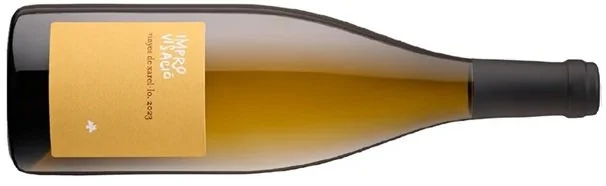
“Enric Soler is a specialist in Xarello, possibly the finest producer of this grape in the world!” - The Wine Advocate
We’ve been banging the drum on behalf of Enric Soler so loudly that we’ve had a complaint from a Mr. Raoni Metuktire, tribal chief of the Kayapo people in the upper Amazon, asking us to keep the noise down. We started shipping Enric’s wines in 2020, having tasted them in Barcelona and been blown away by the quality, and we are delighted to see that the world’s top wine critics are finally coming around to our way of thinking! Tim Atkin MW, who publishes one of the most in-depth reports on Spanish wine, describes him as “one of the best white wine makers in the world" while The Wine Advocate says that “Enric Soler is a specialist in Xarello, possibly the finest producer of this grape in the world!”
Enric is something of a legend within the Catalonian wine scene, having established the Barcelona Wine Academy in the 1990s, where winemakers from all over Catalonia would show up to share ideas and seek advice. As well as this, he also worked in some of Spain's top restaurants and was crowned Spain's 'champion sommelier' in 1997. He then turned his hand to winemaking in 2004 after his grandfather passed away, leaving him the vineyards he had planted in 1945, and Enric now farms them organically and biodynamically, focusing on just one grape variety, Xarello.
We have three of Enric’s wines available and we are focusing your main attention on his Improvisacio 2023, as we have reasonable stocks (156 bottles), but if you scroll further down, you will find his ‘Espenyalluchs’ and his 'Nun Vinya Dels Taus', which have come first and second in the last two editions of Tim Atkin’s ‘Catalonia Report’.
Enric's Xarello ‘Improvisacio’ 2023 is a fabulous rendition of Xarello and it plays like a clean guitar chord with no clumsy fingers muffling the strings, instead pressing down firmly on the frets: acidity, ripeness, concentration, varietal expression and length. Cool stone-fruits, orange blossom honey, sour pineapple and raw almond feature subtly on the palate of this super stylish white. If you need a thumbnail sketch, imagine a Chablis made from lees-aged Albariño: cool, incisive, electric.
The grapes were sourced from an organically-farmed 1.3 hectare vineyard with vines between 45 and 65 years of age. It was fermented and aged for 8 months in Stockinger barrels and concrete eggs and only indigenous yeasts were used. If you like the ‘Louro’ Godello by Rafael Palacios, then this will be right in your wheelhouse. Whatever that means. 12.5% alc. 6,240 bottles produced. Biodynamically farmed. Drink now-2030.
Press reviews:
Tamlyn Currin for Jancis Robinson.com: “This might be the richest and least monastic vintage of Improvisació that I have tasted – although that’s not to say it isn’t, still, a cathedral carved from citrine and rock salt. It’s always been a wine that rewards sipping slowly and empirically over several days – like any broad, dramatic landscape shaped by micro iota, it’s the adjacency of the immense and the minute that creates the most thrilling shifts. It was fascinating to see how the flavours and structure deepened in tone and timbre over five days, but also how they intensified and then receding, one day flattening to blades and planes and certainty, the next arching and clenching into fists and whorls. The nose is, as always, smoky, but here and there glimmers of fennel pollen and lemon-balm flowers. The biggest difference for me is on the palate – ripe apricots every time I taste it. But being Xarello, it is a tidal wine. And some days it seems to dissolve in the mouth like an aspirin, changing from stevia-like sweetness to medicinal bitterness to bitter citrus to citrus sweetness. And then, another time, it tastes like white peaches behind a veil of salt. And then it twists back into bitterness, but this time with the fragrant tension and oily fragrance of lemon-peel oil. The length of the wine is unbelievable. You can still taste it 10 minutes later. Best when it’s not too cold. Best when it’s been open five days. Best with a great book, towering conversation, or silence. Drink now-2038.” 17.5 points
Tim Atkin MW: “Lemon pith, fennel, freshly cut grass and a tight, toastiness on the nose; subtle, but the intensity is there on the palate, driven by a core of vibrant acidity. Another fantastic Improvisacio. Drink now-2034.” 94 points
The Wine Advocate: “The 2023 Improvisació is Xarello from three plots that total 1.3 hectares. It fermented and matured in Austrian oak vats and concrete eggs for nine months and is possibly the wine with more impact from the vintage. Every year, the colour of the label changes, and in 2023, it is a pale orange. The nose is still a little spicy, denoting youth and the effect of the élevage. But the wine is harmonious and complex and should be wonderful with a little more time in bottle. It comes in at 12.5% alcohol. It finishes chalky, dry and tasty. 6,240 bottles produced. Drink now-2031.” 93 points
Decanter (previous vintage): “One of Catalonia’s top white wine producers, Enric Soler has made a chalky, stony Xarello with fabulous energy. It comes from his two main parcels of 45- to 65-year-old vines in the Penedes, and is fermented and aged for eight months in Austrian Stockinger vats and concrete eggs. Lively citrus fruit drives this wine, while there is a hint of fennel that speaks to its Mediterranean origins. It is electric and taut, serious yet mouthwateringly moreish. Drink now-2029.“ 94 points
Customer reviews:
”I had a bottle last night - absolutely delicious!!” - Mr. M. G
“Absolutely fantastic.” - Mr S.C.
"Thank you for the prompt delivery of the wine ordered last week. The stand-out was the Improvisacio!" - Mr. D.R.

“This now plays in the major league.” - The Wine Advocate, 98+ points
This extraordinary wine lives on the edge in so many ways: on the edge of Europe, on the edge of an Ocean, on the edge of a volcano and on the edge of balance (it teases your palate with its crisp acidity, but pulls back from the edge, bringing succulence just in the nick of time).
It’s made from 100 year-old Listan Blanco vines from the village of Palo Blanco, regarded as the best site in Tenerife for white wines, and it transmits the character of the soil and the weather and the maritime climate as eloquently as the ink of a good travel writer. The wine is mineral, zesty, saline and chiselled, packed with citrus, yet rendered complex and fascinating by the substrate of minerals that underpin it. A lemon-flavoured hand-grenade! It’s made to be enjoyed, but it's not going to change its nature to please you. Love it for what it is, and what it is is fabulous! 11.5% alc. Organic farming. Vegan-friendly. Drink now-2030.
Press review:
The Wine Advocate: “The grapes for the 2023 Palo Blanco were harvested earlier than ever, picked even earlier than the grapes from Taganana. It was a warm year, but the wine feels more like it's from a cool climate; it has a moderate 11.5% alcohol and is volcanic and less reductive than in previous years, fine-boned and sharp, with a vibrant palate, effervescent acidity and a dry chalkiness that gives it salinity. It's approachable but should also age in bottle. Drink now-2030.” 98+ points
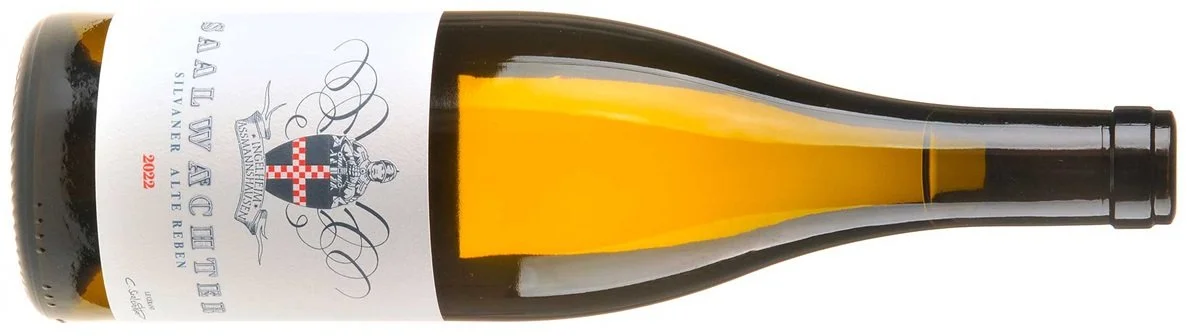
If you can't afford a bottle of Meursault, you might scan the shelves of your local wine shop for a Chardonnay from New Zealand, perhaps, or maybe Oregon. I doubt that you would pause to consider a Silvaner from the banks of the River Rhein, but that's precisely why we exist, to steer you off course and pick something surprising and this wine, from future superstar winemaker, Carsten Saalwächter, is just the sort of tale of the unexpected that we enjoy telling. Its aromas immediately lead you to the Cote d'Or, with their hint of reduction (i.e. struck match), a lot of flint and a basket full of citrus fruits and warm patisserie notes from the time spent in barriques. We tasted through the Meursaults from Domaine Roulot recently and didn't think any of them were as complex or delicious as this. 12% alc. Drink now-2029.
Press review:
The Wine Advocate: “The Silvaner Alte Reben offers a clear, fresh, deep and calcareous bouquet with saline/iodine nuances intermingled with herbal and pencil shaving aromas. Delicate, elegant and light on the palate, this is nonetheless an intense and substantial Sylvaner with a refined phenolic structure and lingering minerality from the Ingelheim limestone soils.” 94 points

A wine that will challenge anyone’s preconceptions about Australian Chardonnay. The pale silver colour immediately tells you that it’s neither over-extracted, nor over-oaked and the palate announces itself as a thoroughly modern wine, bristling with lean, sinewy energy and expertly-judged, fine-grained French oak. There’s a daring, green edge to the fruit, like under-ripe mango, which adds a piquant sourness to the white nectarine, grapefruit, lemongrass and ginger notes, scattered with shavings of white wood. If Australia had a ‘Grand Cru’ classification, you would have to include this wine, sourced from the low-yielding Birdwood vineyard and the Piccadilly Valley. 12.5% alc. Drink now-2030.

“The ‘La Combe Verte’ punches well above its price.” - Vinous
The Walter Scott ‘La Combe Verte’ Chardonnay 2022 is a stunning wine by any measure - well, not any measure, I mean a tape-measure would be useless, as would a speedometer, but can we move along please, I have a lot to say and I don’t have time for any more of your petty interruptions. All of the wines that it pays homage to with its flinty, matchstick aromas and its insanely complex palate (Coche-Dury, Le Moine, Colin-Morey, Leflaive, Arnaud Ente), are no longer affordable to mere mortals like us, so this is exactly the sort of discovery that you demand of us and rightly so! There may come a time when the name, Walter Scott, will appear between those brackets too, but for now it is an estate that has only just set foot on the travellator and begun gliding serenely past its peers. The Wine Advocate’s reviews for the new Walter Scott releases have just been published and all 15 wines sit within a bracket of 93 to 99 points, a notable rise on previous years, so it’s not just our view that this is a domaine going places fast.
The ‘La Combe Verte’ 2022 is a truly world-class Chardonnay, which you can confidently take to a dinner party in the safe knowledge that it will be the wine of the night, no matter what your friends bring along. And if it isn’t, then may we politely suggest that you don’t change your wine merchant, you change your friends!
I know that £39.50 is a bit of reach for a lot of people at the moment, but if you are going to splash out on the word of a wine merchant, I want to make sure you get what you pay for and I think this could sit in the company of any fine white Burgundy or new world Chardonnay at twice the price.
Organically farmed/ biodynamically farmed
Press review:
The Wine Advocate: “Fruit for the 2022 Chardonnay La Combe Verte comes from five premier vineyards in the Willamette Valley planted on both volcanic and marine sedimentary soils: Freedom Hill, Hyland, Koosah, Sojeau and Witness Tree. It was blended with 2% Aligoté and matured for eight months in 25% new French oak before finishing with two months in stainless steel. It offers integrated tones of matchstick and flint that complement a core of quince paste, peach preserves, meringue, beeswax and cashews. The light-bodied palate is seamless and shimmery, pairing concentrated, honeyed fruit with linear acidity that results in a weightless feel and an ethereal finish. Drink now-2035.“ 93 points
Decanter: “La Combe Verte Chardonnay offers a laser-focused minerality, smoky flint, grilled pineapple, and ocean breeze salinity. The palate is a melange of tangy citrus and concentrated fruits—flavours of grilled lemon peel, petrichor, zingy lime pith, and passionfruit. Drink now-2031.” 94 points
Vinous: “A burst of savoury reduction slowly blows off the 2022 Chardonnay La Combe Verte to reveal a deeply seductive blend of wildflowers and sage, giving way to nectarines and candied ginger. This is surprisingly weighty in feel, communicating a level of prominence balanced by a core of juicy acidity. Flinty minerality adds depth to its core of ripe pears and green melon. The 2022 leaves a pretty inner sweetness while cleaning up remarkably well with traces of candied lime that linger. The La Combe Verte punches well above its price. Drink now-2027.” 92 points
Customer comments:
“Very stylish and restrained!” - Mr A.W.

“One of South America’s greatest whites.” - Tim Atkin MW, 98 points
Semillon is such a fantastic grape variety, contributing to some of the world’s finest wines without getting the credit it deserves, whether in the sweet wines of Sauternes, the exquisite dry whites of Bordeaux, the age-worthy wines from the Hunter Valley or cult New World expressions from producers like Boekenhoutskloof and Riccitelli.
Matias Riccitelli has crafted a stunning wine from the 2023 harvest of these gnarly, old, ungrafted Semillon. Aromas of waxy lemons and green melon skin, cut grass and whetstone lead to a palate that is deep and complex, with lanolin, wild honey, lime peel and fresh dough cut through by wonderfully tangy acidity and a touch of salinity that puts one in mind of a Cretan Assyrtiko. This is Riccitelli’s best vintage yet and is a wine that belongs at the very top table with some of the finest white wines in the world. 12% alc. Fermented with native yeasts in French oak foudres. Drink now-2032.
Press review:
Tim Atkin MW “Volumes are small at just 4,000 bottles, alas, but this is one of South America’s greatest whites. Sourced from vines planted in Allen in the 1970s, this is a layered, effortlessly complex delight, combining aromas of honeysuckle, fresh hay and wet stones, citrus and pear flavours, subtle wood spices and a tapering finish. Still affordable, given the quality, at $60. Drink now-2035.” 98 points
JancisRobinson.com: “Very layered aromas of yellow pear and quince, wax, honey and parchment. It continues to unfold with air. Great depth and concentration on the palate, and there’s a slight tannic grip that adds to the texture. Fuller-bodied than most Hunter Valley Semillon. Brisk acidity helps tie everything together. It’s already fabulous but should age very well. Drink now-2034.” 17.5+ points
The Wine Advocate: “Once again, the 2023 Old Vines from Patagonia Sémillon is one of the most memorable examples of the variety in Argentina, derived from ungrafted vines planted in the 1970s and fermented and aged in foudre. A deep and intoxicating bouquet melds raw honey, beeswax, orchard fruits, pastry cream and hazelnut aromas with increasingly energetic citrus and herbal top notes as the wine opens. The mouthfeel is oily, spherical and weightlessly concentrated, culminating in a long, outstanding finish that is simultaneously dense, substantial, ethereal and laser-focused. As with the Patagonian Merlot bottling, this more than merits additional time in bottle and should reward more than a decade in the cellar.” 96 points
Customer comments:
“The wine went down a storm!” - Ms. R.L.

This a really exciting new wine from Domaine Bernard Moreau, sourced from some of the best parcels in Saint Aubin and priced very keenly for a Premier Cru white Burgundy from the small-but-perfectly-formed 2020 vintage. It has real poise and balance and a classical feel, with the fruit concentration, the acidity, the oak influence and the mineral aspect all in perfect harmony. It has everything we look for in a white Burgundy and, what’s more, it’s almost exclusive to Vin Cognito (only one other UK merchant received an allocation, as 2020 yielded such a tiny harvest). 13% alc. Drink now-2028.
Organically farmed

From the famous rocky outcrop of decomposed granite that is farmed by local heroes like Eben Sadie and Craig Hawkins, the 2022 ‘Fire By Night’ shows classic Paardeberg characteristics of richness, minerality and tension in equal measure. Pear, mango, apple granita, green plum, lime juice and thatching straw feature in this taut and chiselled Chenin Blanc. 12.5% alc. Fermented in cement eggs. Drink now-2035.
Press reviews:
Tim Atkin MW “Fire by Night comes from the Alheits' Newudam farm, made with grapes from parcels planted between 1972 and 1985 on the Paardeberg. You can taste the granite here, as well as the intensity of dry-farmed old vines: focused, taut and concentrated, with fennel, oatmeal and thatch aromas, subtle wood spices and a flinty, mouth-watering finish. Drink now- 2035.“ 97 points
Jancis Robinson.com: “Smells like tarte Tatin before it goes into the oven. But very tight – still way too young to drink. Crunchy raw pear. Sorrel. Toast and smoke. Green apricot. Apricot-skin texture and very very very stony. The finish is the mouth-watering taste of cement dust. And wonderful bitterness that weaves real tension and length into the finish. Drink 2027-2032.” 17++ points

“All class from beginning to end.“ - 97 points, The Australian Wine Companion
So, there we were, cooing over Shaun Crinion's Dappled 'Appellation' Chardonnay with his UK importer, telling him how it was one of the best Australian Chardonnays we had ever tasted, when he looked left and right to make sure the coast was clear and, in a conspiratorial whisper, told us that he also had 3 cases of the Dappled 'Les Vergers' Single Vineyard Chardonnay, which he had served blind to a group of sommeliers alongside a Meursault from Domaine Roulot and everyone mistook it for the Roulot. Knowing already how great the 'Appellation' Chardonnay was, we didn't hesitate and snapped up those 36 bottles and we suggest you do the same. 13% alc. Whole bunch pressed. Wild vineyard yeasts. 12 months in new and used French oak on full lees with no battonage. Drink now-2032.
Press review:
The Australian Wine Companion: “Sourced from a vineyard in Seville at 232m. A natural yeast fermentation and minimal SO2. A luminous and bright green gold. A beautifully poised and understated bouquet with white peach, fresh pear, a little cashew and some oyster shells. The palate is linear, chalky and long. All class from beginning to end, and a wine that will reward at least 3–4 years in a cool, dark place.” 97 points
“One privilege of tasting and writing about wines selected for The Wine Companion is discovering a hitherto unknown winemaker, winery and/or wine that blows your mind. Now i mean no disrespect to wineries previously selected for ‘Best New Winery’, nor do i want to paint myself into a corner in the years to come, but people such as owner-winemaker Shaun Crinion of Dappled Wines come around once in a metaphorical blue moon.” - James Halliday, Australian Wine Companion

“A truly heavenly Chardonnay.” - The Australian Wine Companion, 97 points
“So good. Again!” - The Wine Advocate, 96 points
The Rocket Chardonnay has burst onto the scene (ha! ha! like a rocket, geddit?! brilliant!) since its launch (ha! ha! like a rocket, geddit?! brilliant!) in 2017. It has already become a cult wine without even trying (actually... trying to become a cult wine instantly disqualifies you from becoming one). The aromas lift off (ha! ha! like a rocket, geddit! brilliant!), displaying all manner of ineffable loveliness, best described as a continental breakfast trolley tumbling down the side of a volcano, so there’s lime marmalade, toast, warm viennoiserie, pumice stone, struck match, flint and half a grapefruit. 13.5% alc. Drink now-2032.
Press reviews:
The Australian Wine Companion: “The back label confides 'Made on earth by humans.' It is a truly heavenly Chardonnay, with impeccable balance and mouthfeel, attributes it will retain as it matures in bottle. The fruit has the whip hand, not the oak.“ 97 points
The Wine Advocate: "The 2022 Limited Release The Rocket Chardonnay is a more open-weave, raw, powerful rendition of Chardonnay than the sleek Tilbury, tasted alongside. This has crushed curry leaf in profusion, sugared pink grapefruit, apple pie, layers of preserved lemon and even a hint of loquat. There is an all-consuming galaxy of flavour and texture here. Some roasted almonds and crushed shells close the palate. So good. Again! Drink now-2035." 96 points
Decanter (previous vintage): “It’s lean, sprightly and immediately delicious. The racy front palate has fresh lemon zing and a smart savoury drawstring around the waist. Complexity unfurls as flavours gently roll without ever intruding on the lightness and bounce of the palate. It’s cleverly understated, yet highly sophisticated; a lively dancer that’s great fun to be with.” 98 points
Don’t buy this Sauvignon Blanc if you like Sauvignon Blanc, because you’d never know it was Sauvignon Blanc. It’s a wine that bristles with citrus and minerals. It's inadvertently cutting-edge, brushing shoulders with the ‘natural’ wine movement, without getting embroiled in all their dogma. It’s a wine that gives back as much in complexity as you give it in attention. It has clearly been shepherded from the vineyard to the bottle by a gentle hand; it’s not a technical wine that has been tweaked with knobs and dials. It’s minimalist, in the sense that it’s restrained, precise and linear, quite saline, but it’s spring-loaded too, serpentine, with a fine line of acidity from start to finish. It’s fruity, but earthy too - very earthy, in fact; petrichor and grapefruit; dry, but ample on the palate. Damn it, it’s just delicious! It goes extremely well with a simple grilled fillet of sea bream with just a sprinkle of salt and a squeeze of lemon. Or I can imagine it being great with charred squid or a lemony risotto. We put it through its paces with salmon sashimi and it worked a treat, the pristine fruit cleansing the palate. Why not try a bottle or two and give back your impressions. 13% alc. Aged in large oak barrels for 10 months. Low yields of 32 hl/ha. Organic & biodynamic. Drink now-2028.
Press review:
Jancis Robinson (Tamlyn Currin): “If ever a wine smelt like struck flint ... Or like the old moss-covered stones under a little highland waterfall. Don't expect conventional Sauvignon Blanc from this smoky, punctuated, green-and-gold wine that is ripped with herbal bitterness, rugged with stones, pithy with grapefruit peel and glistening with a tiny smudge of wild honey. If you can, give it time to warm up a little in the glass and relax – when it's cold it is a little bit hunched up in the shoulders. No hurry to drink this (so buy a few extra bottles to tuck away). It will evolve over the next few years. Drink now-2028.” 17 points